


Engaging Ākonga Through Real-World Maths at Pamapuria School
Whaea Jo at Pāmapūria School is using a hands-on, practical approach to teaching math, which is leading to great results in her class!
The method involves students engaging with real-world problems or interactive activities that make abstract math concepts more accessible and understandable. By doing this, she helps her students connect mathematical concepts to everyday situations, making the subject both engaging and relevant. The school Principal Mrs Bamber is in full support of her teachers creating these practical learning environments and will engage in practical learning experiences every chance she gets.
Here’s a question and answer session with Whaea Jo to inspire some future practical sessions within your classroom and she also shares some of her favourite philosophies with us!
What inspired you to make maths more practical and hands-on for your ākonga?
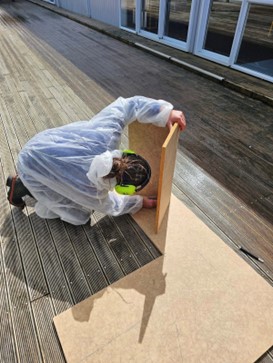
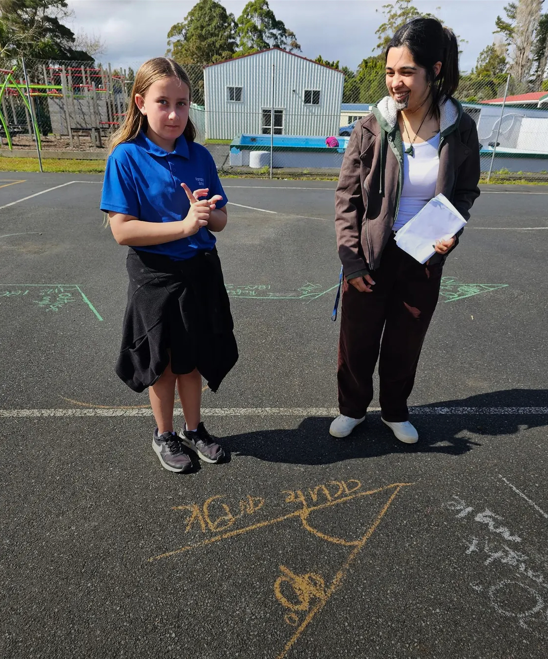
First and foremost it's knowing our ākonga and how they best learn. It is a passion for what I do, I am always looking for new ways to help our students thrive in their learning. How can I make a difference? Sometimes they struggle to see the relevance in maths and think it is boring, so I decided to teach maths through building gutter boards and chairs. Playing games such as pool, basketball and rugby. Taking the ākonga outside, drawing on the courts and making our lessons interactive. Demonstrating that we use maths in all areas of our life, not just jobs but even in the sports that we love. If I am inspired and this comes through, I believe it helps inspire our ākonga
We also start our day with fitness in our little gym, then on the field for ‘leave no man behind’ and anything I ask of the ākonga I do too and when our principal Mrs Bamber can, she joins in on our fitness sessions. We then head back to class for karakia and pepeha before we all sit down and have breakfast together. I believe this also helps set us up for our day in a positive and constructive way.
How do you turn abstract maths concepts into practical activities that ākonga can relate to?
I think about how best to get the mathematical concepts across, what will they understand, can we make it fun and engaging. I look around me for inspiration and where in life we use this and then turn it into a practical lesson that links to the curriculum and inspires our ākonga.
What resources or tools do you use to make maths more interactive and engaging?
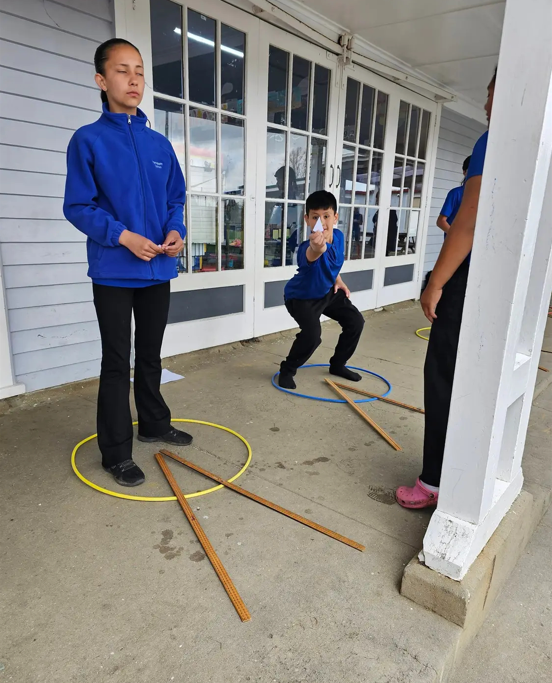
Building tools, equipment, wood, creating plans for building using angles, measurement and times tables. Demonstrating angles through playing pool, shooting hoops and scoring that conversion. Chalk for drawing equations and angles on concrete, hula hoops for demonstrating ¼ turn = 90 degree angle, ½ turn =180 degree angle.
What impact has this practical approach had on your ākonga understanding of maths?
Ākonga have made excellent progress in their maths and this has shown through in their end of year results. Ākonga who were not interested in maths are now participating and finding maths more interesting and fun. Also every ākonga was able to share what they had learnt in maths with their peers and parents.
How do you ensure that these practical sessions still cover key maths curriculum objectives?
Linking our learning to the curriculum is actually easier than you think. Ākonga are clearly able to share what the key learning is and what the objective of the lesson was. Today we were learning about angles, we used a right angle when cutting the sides for our gutter boards which is 90 degrees. Ākonga are able to use maths language when naming the different angles and how many degrees in each. Today we learnt about perimeter and that is a measurement of the outside of a shape, an example building a fence around our garden. Other practical examples include; Students creating budgets for a family of four; organising paying rent, buying food on a budget and paying bills. This is place value, adding, subtracting and also a clear link to financial literacy while creating opportunities to see how real life works.
What challenges did you face when first implementing practical maths sessions, and how did you overcome them?
It was really about ensuring that my planning is clearly showing the learning and links to the curriculum. I have been very lucky here at Pāmapūria with a principal who understands and supports learning outside the classroom. Parents and caregivers have also been very supportive and enjoy seeing the posts and hearing about the learning happening through real life experiences. It is through the progress the students are making that whānau can see this is working and when they go home and share what they have learnt.
How can other kaiako use this method to boost their ākonga confidence in maths?
Hands-on learning experiences are accessible to all ages. You just need to think about how to tailor it to the needs, interests and ages of your tamariki. Showing them how maths is used in our everyday lives (e.g. buying something and receiving change from a shop) and in the places we live and visit (e.g. dairy farm milking shed - measurement looking at ml/L of milk, multiplication using cows legs and/or teets, milk tanker and how many Ls it holds, the kms they travel to/from the factory to the milking shed, cost of hay to feed out etc).
What key takeaways or tips would you suggest for kaiako wanting to make maths more relevant and practical in their own classrooms?
Thinking outside the box, everything we do can be linked to the curriculum. Learning should be fun and interactive. We should also demonstrate the relevance and need for maths, reading and writing in our everyday life. Drivers licence, shopping, finances, building, sports. We are all life long learners and if we don't know how to do something, we ask, we learn, we demonstrate. We live and breathe our kura mission statement of #guidingpāmapūrialearnerstothrive - meaning all of us; tamariki, kaimahi, whānau.
“I’ve come to a frightening conclusion that I am the decisive element in the classroom. It’s my personal approach that creates the climate. It’s my daily mood that makes the weather. As a teacher, I possess a tremendous power to make a child’s life miserable or joyous. I can be a tool of torture or an instrument of inspiration. I can humiliate or heal. In all situations, it is my response that decides whether a crisis will be escalated or de-escalated and a child humanized or dehumanized.” ― Haim Ginott
“If we treat people as they are, we make them worse. If we treat people as they ought to be, we help them become what they are capable of becoming.”
We must not forget the importance of a loving and caring educator in the room. One that has the ability to build rapport, give and gain trust, provides support, and pushes, all at the same time. Education is not a vessel to be filled but a fire to be ignited.
Article written by Deanna Saxon, Healthy Active Facilitator